For restaurants and commercial kitchens in Myrtle Beach, keeping the kitchen exhaust system clean is an important part of routine maintenance and fire prevention. Grease and other residues can accumulate inside hoods, filters, ducts, and exhaust fans, creating conditions that can increase the risk of a commercial kitchen fire.
The NFPA 96 standard, published by the National Fire Protection Association, provides requirements for ventilation control and fire protection of commercial cooking operations. Regular inspection and cleaning of kitchen exhaust systems are important parts of maintaining these systems.
For restaurants in Myrtle Beach and the surrounding area, working with a professional commercial kitchen exhaust cleaning company can help keep your exhaust system properly maintained. HOODZ of Myrtle Beach provides professional kitchen hood and exhaust cleaning services designed to help commercial kitchens maintain clean, properly maintained exhaust systems.
What Is NFPA 96?
NFPA 96 is the Standard for Ventilation Control and Fire Protection of Commercial Cooking Operations. It addresses commercial cooking ventilation systems and fire protection, including requirements related to exhaust hoods, ducts, fans, grease removal devices, and other components.
The standard addresses inspection, testing, maintenance, and cleanliness of commercial cooking ventilation and fire protection systems. These responsibilities generally fall to the equipment owner unless they have been transferred to another party through a written agreement.
Because commercial kitchen exhaust systems can accumulate grease over time, routine inspection and cleaning are essential parts of maintaining the system.
Why NFPA 96 Compliant Hood Cleaning Matters
Commercial cooking produces grease-laden vapors that are drawn into the kitchen exhaust system. Although filters capture some grease, deposits can still accumulate throughout the hood, ductwork, exhaust fan, and other components.
If grease is allowed to build up, it can become a serious fire-safety concern.
Professional hood cleaning helps remove grease and other contaminants from the exhaust system, allowing kitchen operators to address buildup before it becomes a larger maintenance or fire-prevention issue.
Regular cleaning can help:
- Reduce combustible grease accumulation
- Maintain a cleaner kitchen exhaust system
- Support commercial kitchen fire-prevention efforts
- Keep exhaust components properly maintained
- Help businesses meet applicable inspection and maintenance requirements
- Maintain documentation of scheduled cleaning
It’s important to remember that hood cleaning is only one part of overall commercial kitchen fire safety. Fire suppression systems, cooking equipment, ventilation components, and other equipment must also be properly maintained.
How Often Should a Commercial Kitchen Hood Be Cleaned?
The appropriate cleaning frequency depends on the type and volume of cooking performed.
NFPA 96 includes inspection schedules based on cooking volume. These include more frequent inspections for operations such as solid-fuel cooking and high-volume cooking, while moderate- and low-volume operations generally have longer inspection intervals.
High-volume operations can include restaurants with 24-hour cooking, charbroiling, and wok cooking. A restaurant that operates around the clock or regularly performs high-grease cooking may require more frequent cleaning than a lower-volume commercial kitchen.
Because every kitchen is different, restaurant owners and managers should consider the type of cooking, volume of use, amount of grease produced, and applicable local requirements when determining an appropriate cleaning schedule.
What Does Professional Hood Cleaning Include?
NFPA 96 applies to the commercial cooking exhaust system rather than simply the visible portion of the hood.
A thorough commercial kitchen exhaust cleaning may address several components throughout the system, including:
Kitchen Hood
The hood is the visible portion of the exhaust system located above the cooking equipment. Grease and residue can accumulate on its interior surfaces and other components.
Grease Filters
Filters help capture grease before it travels farther into the exhaust system. Keeping them clean and properly maintained helps support the operation of the ventilation system.
Exhaust Ductwork
Grease can accumulate inside the exhaust ducts connecting the hood to the exhaust fan. Because much of this area isn’t visible during normal kitchen operations, professional cleaning is an important part of exhaust-system maintenance.
Exhaust Fan
The rooftop exhaust fan is another component that can collect grease. Professional cleaning can address grease accumulation on accessible fan components as part of the overall exhaust-system cleaning process.
What Happens During an NFPA 96 Hood Cleaning?
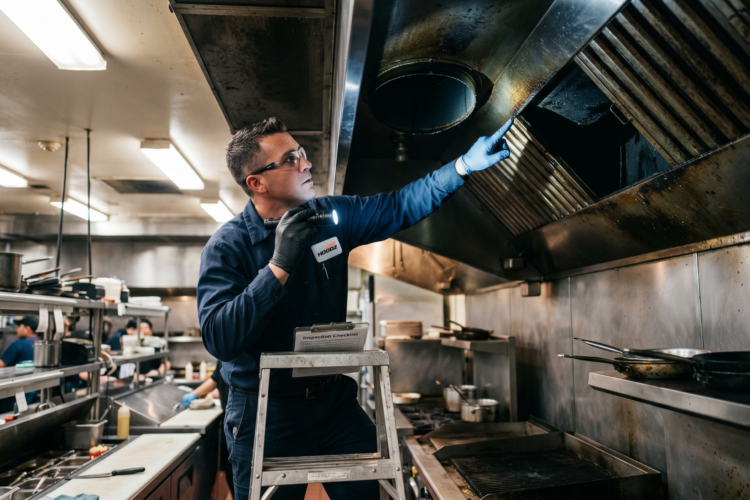
Professional kitchen exhaust cleaning typically begins with preparing and protecting the surrounding kitchen area. Technicians then access the exhaust system and remove accumulated grease and other deposits.
Depending on the system, professional cleaning may involve:
- Preparing the kitchen – Cooking equipment and surrounding areas are protected from water, grease, and cleaning products.
- Accessing the exhaust system – Technicians access the hood, filters, ductwork, and exhaust fan.
- Removing grease buildup – Grease and other deposits are removed using appropriate cleaning methods and equipment.
- Cleaning exhaust components – Accessible surfaces throughout the system are thoroughly cleaned.
- Cleaning the surrounding area – The kitchen is cleaned and restored after the service.
- Documenting the service – Appropriate cleaning documentation can help businesses maintain records of exhaust-system maintenance.
The goal is to remove accumulated grease and leave the commercial kitchen exhaust system substantially cleaner.
Choosing an NFPA 96 Hood Cleaning Company in Myrtle Beach
When choosing a commercial kitchen exhaust cleaning company in Myrtle Beach, restaurant owners and managers should look for a provider with experience cleaning commercial kitchen exhaust systems.
A professional service provider should be able to explain its cleaning process, identify the components included in the service, and provide appropriate documentation after cleaning.
It’s also important to understand that “NFPA 96 compliant” is not simply a label that can be applied to a cleaning service. Compliance depends on the overall condition, design, maintenance, inspection, and operation of the commercial cooking system, as well as requirements enforced by the applicable authority having jurisdiction.
Working with an experienced commercial kitchen exhaust cleaning company can help restaurant operators stay on top of their required maintenance and address grease accumulation throughout their exhaust systems.
Professional Hood Cleaning in Myrtle Beach
Myrtle Beach’s restaurant industry includes everything from full-service restaurants and seafood establishments to hotels, resorts, commercial kitchens, and other foodservice operations. Regardless of the type of kitchen, maintaining the exhaust system is an important part of routine commercial kitchen maintenance.
Regular inspection and professional cleaning can help address grease accumulation in the hood, ductwork, filters, exhaust fan, and other exhaust-system components.
HOODZ of Myrtle Beach provides professional commercial kitchen exhaust cleaning services for restaurants and other commercial kitchens throughout the Myrtle Beach area. Professional hood cleaning can help businesses maintain cleaner exhaust systems and stay on top of their routine kitchen maintenance.
If your Myrtle Beach commercial kitchen is due for hood cleaning, contact HOODZ of Myrtle Beach to schedule professional exhaust-system cleaning and keep your kitchen maintenance on track.
Latest News
Expert Knowledge From The HOODZ Pros
-

The Most Common Causes of Commercial Kitchen Fires
Understanding the most common causes of commercial kitchen fires can help restaurant owners and managers protect their employees, customers, and…
Read More -
Buying a Restaurant? Get an Inspection for Your Kitchen Hood Exhaust System
Purchasing a restaurant is an exciting venture, but it also comes with a mountain of due diligence. One critical area…
Read More -

The Best Restaurant Hood Cleaning Service for Fire Code Compliance
One of the most important — and often overlooked — parts of restaurant safety is maintaining a clean and compliant…
Read More