As a restaurant owner or general manager in the San Francisco Bay Area, you already manage tight margins, strict health codes, and demanding operational schedules. One often-overlooked but critical component of your kitchen ventilation system is the electrostatic precipitator pollution control unit (ESP PCU). These advanced units help keep your exhaust air clean, your neighbors happy, your energy costs down, and your operation compliant with local air quality regulations like those from the Bay Area Air Quality Management District (BAAQMD).
At HOODZ of San Francisco and West San Jose, we’ve seen firsthand how properly maintained ESP PCUs make the difference between smooth operations and costly downtime, fire risks, or regulatory headaches. In this post, we’ll break down what these units are, how they work, their key components, and—most importantly—how to keep them running more efficiently through expert cleaning and maintenance.
What Are Pollution Control Units (PCUs) for Commercial Kitchens?
Commercial kitchen exhaust carries grease, smoke, fine particulate matter, and odors that standard hood filters can’t fully capture. Pollution Control Units (PCUs) are inline devices installed in the exhaust ductwork (often on the roof or in a mechanical room) that provide secondary filtration before the air is released outdoors or, in some cases, recirculated.
ESP PCUs use electrostatic technology to remove up to 99% of grease and smoke particles as small as 0.01 microns—far beyond what mechanical filters alone can achieve. Benefits can include:
– Reduced odor complaints from neighbors (a big win in dense Bay Area neighborhoods).
– Lower fire risk by capturing grease that could otherwise build up in ducts.
– Compliance with environmental regulations and energy efficiency incentives.
– Extended life of downstream components and lower fan energy use due to low pressure drop.
Many modern units also include odor-control modules (like carbon trays) for near-complete mitigation of cooking smells.
How ESP PCUs Work
ESP technology relies on basic electrostatic principles in a two-stage process:
- Ionizer (Charging) Section: As grease- and smoke-laden exhaust enters the unit, it passes through a high-voltage ionizer. Thin wires or spiked plates create a “corona discharge” that gives airborne particles a strong positive electrical charge.
- Collector Section: The now-charged particles flow into a series of alternately charged or grounded metal plates. Opposite charges attract, so the particles stick to the collector plates like magnets—just like dust on a TV screen, but on an industrial scale.
- Final Polish: Clean air then passes through post-filters and/or activated carbon trays that capture any remaining odors.
The result? Dramatically cleaner exhaust air with minimal pressure drop, which saves energy and keeps your exhaust fan quieter and more efficient.
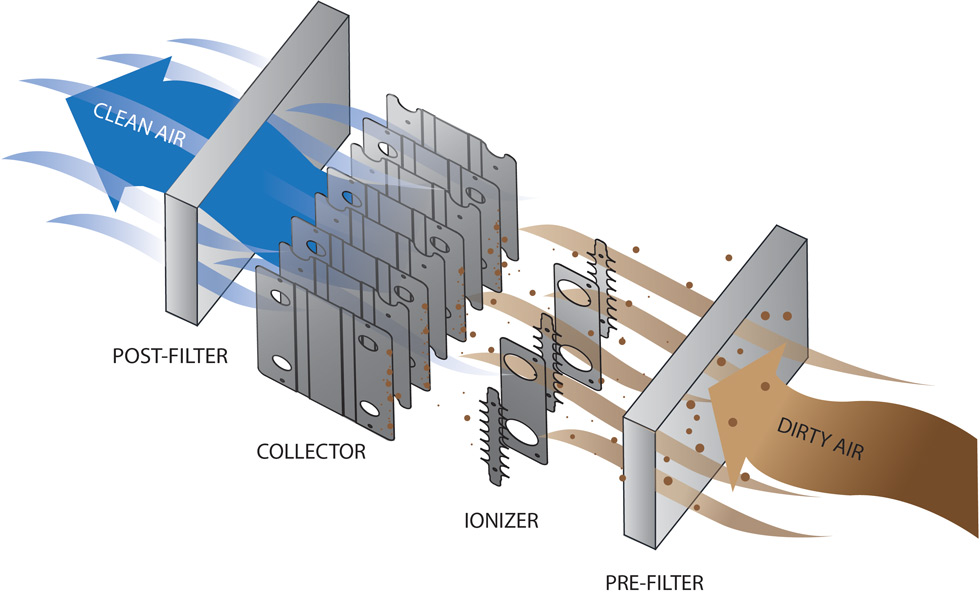
PCU: Pollution Control Unit by CaptiveAire® – CaptiveAire
Diagram of a typical ESP PCU airflow: Dirty air enters through a pre-filter, gets charged in the ionizer section, particles collect on the plates, and clean air exits through a post-filter.
Anatomy of a Commercial Kitchen ESP PCU
A typical ESP PCU is a robust, modular cabinet (often constructed of heavy-gauge stainless or galvanized steel) designed for indoor or outdoor installation. Here are the main components:
– Pre-Filters / Mist Eliminators: Mesh or impingement filters that capture larger grease droplets before they reach the ESP section.
– ESP Cells (the heart of the unit): Removable modules containing the ionizer section (high-voltage electrodes) and collector plates (parallel metal surfaces). These cells are often heavy (around 35 lbs each) and designed for easy removal.
– Wash System: Many units feature an automatic “wash-in-place” system with spray manifolds, detergent reservoirs, and a drain pan to clean the cells nightly.
– Odor Control Module: Trays or beds filled with activated carbon or a carbon/permanganate blend.
– Post-Filters: High-efficiency media or HEPA-style filters for final polishing.
– Electrical Controls & Power Supply: High-voltage transformer-rectifier, control panel with monitoring (voltage/amperage readings, fault alerts), and interlocks with the exhaust fan and fire suppression system.
– Housing & Access Doors: Sealed cabinet with doors for cell removal and service; includes drains and sometimes fire-suppression integration.

Cutaway view of a full ESP PCU showing ESP cells, wash manifold, fan, electrical compartment, and drain.

Close-up of a typical ESP collector cell—the parallel plates where charged grease particles collect.
Why Cleaning and Maintenance Matter—and How to Do It Right
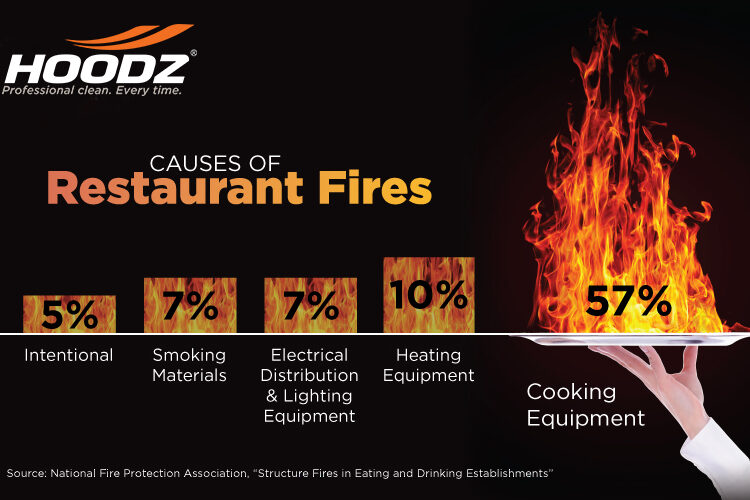
Even with self-cleaning features, ESP PCUs require regular professional attention. Grease buildup reduces efficiency, increases pressure drop (making your fans work harder), raises fire risk, and can void warranties or trigger code violations. Poor maintenance also leads to higher energy bills and potential BAAQMD citations. Staying compliant with NFPA 96 fire codes is essential—it is the national standard for ventilation control and fire protection of commercial cooking operations, helping prevent grease-related fires that pose severe risks to your staff, customers, property, and business continuity.
Recommended Schedules (Site-Specific)
Frequency depends on your cooking volume, menu (e.g., heavy charbroiling, wok, or solid-fuel), and operating hours. Use manufacturer guidelines as a starting point, then fine-tune after the first few months of operation:
– Daily: Automatic wash cycle (if equipped) runs after shutdown.
– Weekly: Visual inspection of drains, detergent levels, and control panel indicators.
– Monthly to Quarterly: Deep cleaning and cell removal/inspection (more frequent for 24-hour or high-grease operations).
– Every 6–12 Months: Carbon tray inspection/replacement and full system performance check.
– Overall Exhaust System: Follow NFPA 96 guidelines (monthly for solid fuel, quarterly for high-volume, semi-annually for moderate, annually for low-volume) and coordinate PCU service with full hood/duct cleaning.
Step-by-Step Cleaning Procedures
Always use trained, certified technicians – high-voltage equipment is involved, and equipment must be cleaned to NFPA 96 standards.
- Safety First (Precautionary Measures):
– Shut down the exhaust fan and cooking equipment.
– Perform lockout/tagout (LOTO) on all power sources.
– Discharge residual high voltage using an insulated screwdriver or grounding tool.
– Wear PPE: gloves, safety glasses, and protective clothing.
– Ensure proper ventilation and follow confined-space protocols if working inside the unit.
– Never use flammable cleaners or high-pressure washers (they can bend plates or damage ionizer wires).
- Remove Components:
– Open access doors and carefully slide out pre-filters, ESP cells, and carbon trays.
- Clean the ESP Cells:
– Soak in a tub of hot water (≥80°C / 176°F) mixed with manufacturer-approved mild detergent or caustic solution (e.g., diluted NaOH).
– Agitate gently; let soak 30–60 minutes.
– Rinse thoroughly with low-pressure hot water (never power-wash).
– Allow to air-dry completely before reinstalling.
- Clean the Rest of the Unit:
– Wipe down cabinet interior, wash manifolds, drain pan, and pre/post-filters.
– Inspect ionizer wires, collector plates, ceramic insulators, and seals for damage or arcing.
– Flush drain lines to prevent clogs.
- Reassemble and Test:
– Reinstall all components securely.
– Restore power and run a test cycle while monitoring voltage, amperage, and airflow.
– Log the service for compliance records.
Pro Tip: Many units now include advanced monitoring systems that alert you to pressure drops or faults—use these data to optimize your schedule and avoid surprises.
Partner with the Bay Area’s ESP PCU Experts
Maintaining an ESP PCU isn’t a DIY project or a simple “hose-it-down” task. It requires specialized knowledge, the right equipment, and full understanding of local codes and manufacturer specifications.
That’s where HOODZ of the San Francisco Bay Area comes in. Our certified technicians are trained in the latest ESP PCU cleaning and maintenance protocols, and NFPA 96 compliance standards. We don’t just clean—we help you maximize efficiency, extend equipment life, reduce energy costs, and stay fully compliant. Whether you have a CaptiveAire, Trion, Accurex, Halton, or another brand, we’ve got you covered.
Ready to protect your investment and keep your kitchen running at peak performance? Contact HOODZ of San Francisco and West San Jose today for a no-obligation PCU inspection or to schedule professional cleaning and maintenance. Your equipment—and your neighbors—will thank you.
HOODZ of San Francisco and West San Jose
Serving restaurants and commercial kitchens throughout the region.
Call or visit our site to learn more and schedule service.
Stay safe, stay compliant, and keep cooking great food!
Latest News
Expert Knowledge From The HOODZ Pros
-
The Hidden Danger in the Ducts: Tackling Deep Grease Restoration in Complex Commercial Kitchens
Over a period of years, grease builds up heavily in hard-to-reach, neglected areas of a commercial kitchen hood exhaust system.…
Read More -

What is Compliance Engine and What do Restaurant Owners in the San Francisco Bay Area Need to Know?
Managing a commercial kitchen comes with a long list of regulatory responsibilities, and staying ahead of fire safety codes is…
Read More -
Buying a Restaurant? Get an Inspection for your Kitchen Hood Exhaust System
Purchasing a restaurant is an exciting venture, but it also comes with a mountain of due diligence. One critical area…
Read More